Last updated: August 20, 2026
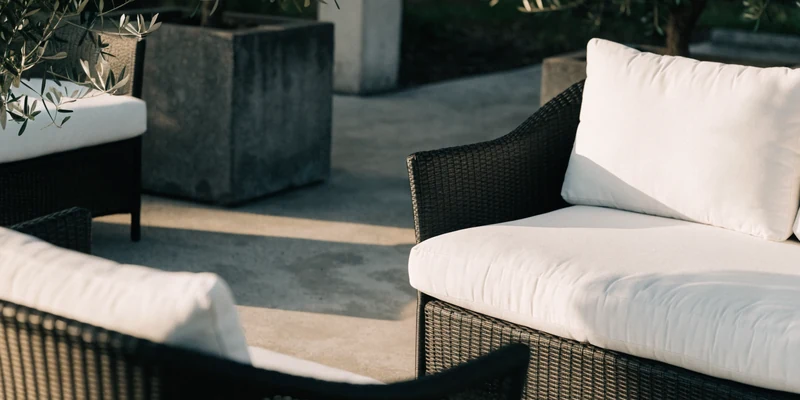
Black wicker patio furniture is the sharpest looking weave you can put on a deck, and it is also the one buyers ask the most practical question about: does it get too hot to sit on. That is a fair question, and the answer is yes on some patios and barely at all on most, which is worth sorting out before you order.
This guide starts with heat, then covers what a dark weave hides and what it does not, why the color names on listings vary so much, and where black fits stylistically.
This article contains affiliate links. If you buy through them, we may earn a commission at no extra cost to you. Learn more.
Quick Answer
Does black wicker patio furniture get too hot?
- Dark surfaces absorb more sunlight than light ones, so a black weave does warm up faster in direct sun than a beige set on the same patio.
- It matters on one patio: unshaded, facing the afternoon sun, on hard paving that radiates heat back. On a partly shaded space you are unlikely to notice.
- Cushions cancel most of it, because you sit on fabric rather than on the weave.
- Exposed metal is what actually gets uncomfortable. A weave wrapped arm stays far more tolerable than bare powder coated aluminum.
- Black hides spills and scuffs better than any other color, but pollen and dust show on it more clearly than on mid brown.
Does Black Wicker Really Get Hotter?
Yes, though less dramatically than people expect. A dark surface absorbs more of the light that hits it and reflects less, so in direct sun a black weave reaches a higher surface temperature than a pale one under identical conditions. Whether that becomes a comfort problem depends on shade, airflow and what you are sitting on.
Frame color is one factor among four, and the other three matter more: how much direct sun the spot gets, what the paving is made of, and whether the seat is cushioned.
Where the Heat Is Actually Noticeable
The patio where black is a genuine consideration is unshaded, faces the afternoon sun, and sits on concrete, stone or dark composite decking that stores and re radiates heat. On that patio all furniture gets warm and dark furniture gets warmer, most noticeably in the hours after peak sun.
The parts that get uncomfortable are rarely the weave. They are the exposed metal: armrest tops without a woven wrap, table frames, and the feet you brush with a bare ankle.
What Cancels Most of It
Cushions are the answer, and they come with nearly every set. A light or mid tone cushion in a breathable outdoor fabric stays noticeably cooler than the frame beneath it. Shade is the other lever: with an umbrella or a pergola, black stops being a practical question and becomes purely a style one.
Black, Espresso, Charcoal or Dark Brown?
Listings use these four names loosely and they are not interchangeable. True black is neutral and cool. Espresso and dark brown carry a warm undertone. Charcoal leans gray. Two sets both described as black can sit side by side and clearly not match, which is the problem you hit when you add a chair a year later.
| Listed as | What it usually looks like | Pairs with |
|---|---|---|
| Black | Neutral and cool, close to black powder coated metal | Modern schemes, black window frames, gray stone |
| Espresso | Very dark brown with a warm undertone, reads black in shade | Wood decking, teak accents, warm neutral cushions |
| Charcoal | Dark gray, often a mixed strand with a flecked look | Gray composite decking, cool toned cushions |
| Dark brown | Clearly brown in daylight, most forgiving of dust | Traditional patios, brick, terracotta pots |
The practical rule is to buy the whole set at once, from one listing, if matching matters. If you plan to expand later, note the exact color name and the seller, and expect a second order elsewhere to be a near miss.
What Black Hides and What It Shows
Black is the best color there is for hiding what ruins pale furniture: coffee rings, sunscreen marks, spilled wine, shoe scuffs on the legs and the general grime of a season outdoors. What it does not hide is anything light colored, and outdoors most airborne debris is. So you wipe a black set less often for stains and more often for dust.
Spring pollen shows as a yellow green film on black in a way it never does on beige, and mineral spots from a hose rinse in a hard water area are obvious. Both are minor: wipe the set dry rather than letting it air dry.
Fading Is More Obvious on Black
The honest downside is that a faded black weave does not become a lighter black, it becomes a dull gray brown, and against the parts that stayed shaded that difference is easy to see. Faded gray or brown weaves disguise their own aging much better.
Strand construction is what decides it. Solution dyed resin carries color through the strand rather than on its surface, and UV stabilized language tells you the strand was built for sun. Our guide to all weather wicker furniture explains what those descriptions mean in practice, and if a set has already gone patchy, spray paint for wicker furniture covers what actually adheres to a resin weave.
Black Wicker Picks by Situation
Black suits four common setups: the standard conversation grouping, a modular sectional that wraps a corner, swivel chairs where people turn to talk, and any set that would benefit from lighter cushions. Frame material matters more than color, so look for aluminum in the specifications.
🪑 Best all around: black resin conversation set
A loveseat, two chairs and a table is the layout most patios end up with, and in black it reads more like furniture and less like patio furniture. Check whether the arms are wrapped in weave or left as bare metal.

🛋️ Best for a larger deck: modular sectional
A sectional in a dark weave holds a big space together where scattered chairs look busy, and modular pieces let you reconfigure without having to match a second color later.

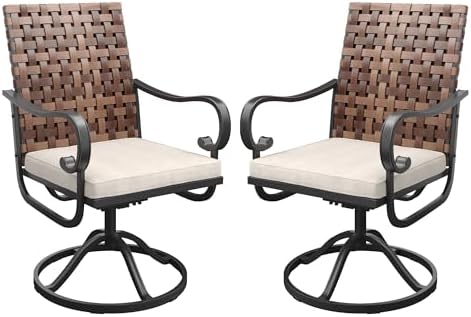
🌿 Best for conversation: swivel chairs
Swivel seats suit a patio where people turn between the table, the yard and each other. In black they anchor a grouping without the bulk of a full sofa.
🎨 The upgrade that changes the most: lighter cushions
Swapping dark cushions for a light or mid tone set does more for summer comfort and for the look of the furniture than any other change. Measure the seat deck before ordering.

Styling Black: Modern, Industrial and Dark Trim
Black outdoor wicker belongs to the same design language as black window frames, dark siding, matte hardware and gray stone. In a contemporary or industrial setting it looks deliberate rather than compromised, and it makes greenery stand out harder than any pale frame does.
The risk is mass, because dark shapes read as solid blocks rather than open weave, so lighter cushions and open frame side tables help on a small patio. On a cottage porch or a coastal deck black fights the setting instead of joining it, and our guide to white wicker patio furniture covers what the paler option asks of you in return.
Common Mistakes to Avoid
- Assuming two listings called black will match. Espresso, charcoal and black are sold under overlapping names, and a later add on chair shows the difference.
- Buying a fully exposed set with bare metal arms. The weave is tolerable in sun; uncovered powder coated aluminum is what makes people move to another chair.
- Pairing black frames with black cushions on an open patio. It photographs beautifully and is the hottest combination you can sit on.
- Skipping the strand description. A surface dyed strand shows a pale core the first time something scrapes it, and on black that mark is obvious.
- Choosing black for a small dark corner. The set vanishes and you lose the shape you paid for.
Frequently Asked Questions
Does black wicker furniture get hot in the sun? It warms up more than a pale weave because dark surfaces absorb more sunlight. In practice the parts that get uncomfortable are exposed metal arms and feet rather than the weave itself, and cushions plus any shade remove most of the difference.
Is black or brown wicker better for outdoors? Black looks sharper and hides stains better; brown hides pollen, dust and fading better. If your patio is unshaded and dusty, brown is the lower maintenance choice. If your house has dark trim and modern lines, black is the one that fits.
Does black wicker fade? Yes, and the fade is more visible than on lighter colors, because a faded black goes dull gray brown next to the parts that stayed shaded. Strands described as UV stabilized and solution dyed hold their color considerably longer.
What cushion color goes with black wicker? Light and mid tones do the most work: oatmeal, sand, soft gray, sage and faded blue all lift a dark frame and stay cooler in sun. Black on black looks striking and is the least comfortable combination outdoors.
What is the difference between black and espresso wicker? Espresso is a very dark brown with a warm undertone that reads as black in shade and clearly brown in daylight. Black is neutral and cool. They do not match, so order a full set from one listing if consistency matters.
The Bottom Line
The heat question has a short answer: black warms up more, cushions and shade cancel most of it, and the parts you actually notice are the exposed metal arms and feet. If your patio is unshaded and paved, look for weave wrapped arms and choose light cushions. Beyond that, black is a style decision that pays off next to dark trim and modern lines, hides spills better than any other color, and asks only that you wipe pollen off in spring and buy a strand that is UV stabilized so it does not go patchy gray.