Last updated: August 20, 2026
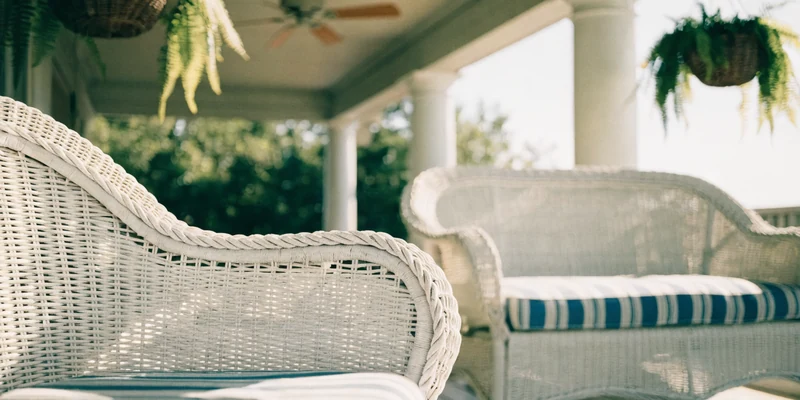
White wicker patio furniture is the easiest weave to fall for and the hardest one to keep looking the way it did in the listing photo. The color is not really the problem. What matters is what the strands are made of, where the set sits, and how much weather it takes between cleanings.
This guide covers what a white weave shows that a darker one hides, painted natural wicker versus white resin, why some white strands go yellow in sun, and which cushion colors work with a white frame.
This article contains affiliate links. If you buy through them, we may earn a commission at no extra cost to you. Learn more.
Quick Answer
Which white wicker patio furniture actually stays white?
- White resin over an aluminum frame is the only version that belongs on an uncovered patio. Painted natural wicker is a porch, sunroom or indoor piece.
- White hides nothing. Pollen, rain splash and mildew all read clearly against it, so plan on wiping the set more often than a dark one.
- Yellowing comes from sunlight acting on the strand. Listings that say nothing about UV treatment are telling you something.
- Solution dyed strands carry color all the way through, so scuffs stay close to the original shade.
- White reads coastal, cottage and sunroom. Pair it with warm neutrals or faded blue, not with bright white cushions.
What a White Weave Shows That a Dark One Hides
White is a high contrast background, so anything that lands on it is visible from across the yard. Tree pollen, road dust, rain splash off a deck board and the black speckle of mildew all read clearly against white strands. On an espresso weave the same debris disappears until it is thick enough to feel under your hand.
That does not make white a bad choice; it makes it an honest one. Two spots go first: the seat deck, where debris settles between strands, and the lower legs, where rain bounces grit up off the paving.
Mildew and the Shaded Corner
Mildew is the one form of dirt genuinely worse on white, because the black spotting settles into the weave and has nowhere to hide. It appears where air does not move: a north facing porch corner, under a table, or on a set stored damp beneath a cover.
Prevention is mostly airflow. Bring cushions in before a wet stretch, tilt seats so water runs off, and lift covers on dry days. Our walkthrough on how to clean wicker furniture covers resin and natural weaves separately, which matters more than the color does.
Painted Natural Wicker or White Resin?
These are two different products that share a color. Painted natural wicker is rattan or reed with white finish on the surface, suited to a sunroom or covered porch. White resin wicker is a synthetic strand woven over a metal frame, built for weather. Buying the wrong one for the spot is the most common mistake with white.
| Type | Where it belongs | How the white behaves | Watch for |
|---|---|---|---|
| Painted natural wicker | Sunroom, enclosed porch, indoors | Paint sits on the surface and chips at contact points | Listings calling it outdoor without saying covered |
| White resin over aluminum | Open patio, deck, poolside | Color in the strand, so scuffs stay light | Frame stated as aluminum, not just metal |
| White resin over steel | Covered patio or seasonal use | Same strand, but rust can bleed and stain the white | Coating condition at welds and leg ends |
| Whitewashed natural rattan | Living room and bedroom | Translucent finish that lets grain show, ambers with age | Humidity, which loosens the wrap over time |
If rain reaches the set, the answer is resin over aluminum and the rest of the decision is weave quality and cushions. Our guide to resin wicker patio furniture goes through the strand types in more detail.
Why Some White Weaves Turn Yellow
Yellowing is sunlight acting on the plastic itself, not dirt sitting on it. Ultraviolet light breaks down the polymer at the surface of the strand, and the result reads as a yellow or cream cast. It happens fastest on strands made without UV stabilizers, and it shows worst on white because no pigment masks the shift.
A set can look fine in spring and slightly off by the end of a second summer, with the sunny side a different shade from the shaded side. Once the strand has changed, cleaning does not reverse it.
What the Listing Can Tell You
Read the strand description rather than the headline. Language about UV stabilized, UV resistant or all weather resin points to a strand engineered for sun. High density polyethylene, usually written as HDPE, is the material most often described that way, and it is also the strand least likely to split.
Solution dyed is the other phrase worth finding. If the listing mentions none of this, look for a close crop of the weave in the photos and read reviews from buyers a season or two in, which is where fading tends to get reported.
White Wicker Picks by Situation
White works in four fairly distinct situations, and each points to a different shape of set. An open patio needs weather rated resin. A balcony needs a small footprint. A sunroom can take painted natural wicker. And any white set outdoors benefits from a cover, which slows both dirt and sun.
🪑 Best all around: white resin conversation set
A loveseat, two chairs and a table is the standard patio layout, and in white resin over aluminum it is the version that can stay outside. Check the frame material in the specifications rather than assuming.

🌿 Best for a balcony: white bistro set
Two chairs and a small table fit where a conversation set will not, and the lighter visual weight of white keeps a narrow balcony from feeling closed in.

🛋️ Best for a sunroom: painted natural wicker
Behind glass, painted natural wicker gives texture and a softer profile that resin does not quite match, and it never has to survive a rainstorm.

☂️ The accessory that matters most: a vented cover
A cover keeps pollen off the seat deck and sun off the strands. Vented matters on white, because a sealed cover traps the moisture that grows mildew.

Styling White: Coastal, Cottage and Sunroom
White wicker carries three looks well. Coastal leans on the contrast between white frames and blue or sand tones. Cottage pairs it with florals, faded stripes and painted wood. Sunroom style lets white recede so plants and light do the work. In all three the frame is a background element rather than the focal point.
Where white struggles is a modern or industrial scheme, where the softness of the weave reads as dated beside clean metal and dark stone. That is the setting a darker weave suits better, which our guide to black wicker patio furniture gets into.
Choosing Cushion Colors
Bright white cushions next to a white frame are a trap. Fabric and resin almost never match in tone, so either the cushion makes the frame look yellow or the frame makes the cushion look blue. Warm neutrals such as oatmeal, sand and taupe sidestep the comparison entirely.
If you want color, faded blue, soft sage and terracotta all sit well against white, and a mid tone cushion hides its own dirt far better than a pale one.
Common Mistakes to Avoid
- Putting painted natural wicker on an open patio. The paint chips, water reaches the reed underneath, and the piece is finished in a season or two.
- Ignoring the frame material. Rust bleeding through a white weave from a steel frame is a stain you cannot clean off.
- Buying white with no mention of UV treatment. Yellowing is permanent, and the sunniest side shows it first.
- Matching bright white cushions to a white frame. The tones will not agree, and the frame ends up looking dingy.
- Storing the set damp under a sealed cover. That combination grows mildew faster than leaving it uncovered would.
Frequently Asked Questions
Does white wicker patio furniture get dirty faster than dark wicker? It does not collect dirt faster, it shows dirt sooner. Pollen, dust and mildew are equally present on a dark weave, but the contrast against white makes them visible from a distance, so white sets simply get cleaned more often.
Why does white resin wicker turn yellow? Ultraviolet light breaks down the surface of the resin strand, and the result reads as a yellow cast. Strands described as UV stabilized or UV resistant are made to resist it. Once a strand has yellowed, cleaning will not bring the color back.
Can white painted wicker stay outside? Only under permanent cover, and even then it is a compromise. Paint on rattan or reed chips at the arms and legs, and once water reaches the fiber the weave loosens. For open patios, choose white resin over an aluminum frame instead.
What cushion color goes with white wicker? Warm neutrals such as oatmeal, sand and taupe are safest, because they avoid a direct tone comparison with the frame. Faded blue, sage and terracotta also work well. Bright white cushions are the one combination to skip.
How do I get mildew off white wicker? Catch it early and work along the weave with a soft brush and mild soap solution, then rinse and dry completely. Improving airflow around the piece does more to prevent the next round than any cleaning product will.
The Bottom Line
White is a placement decision before it is a style decision. If rain reaches the set, buy white resin over aluminum and check the listing for UV stabilized or solution dyed language, because yellowing cannot be undone. If it lives in a sunroom or under a roof, painted natural wicker gives the softer look with none of the weather risk. Then accept the one real trade: white shows everything, so a quick wipe a few times a season is part of owning it.