Last updated: August 20, 2026
Resin wicker patio furniture is woven plastic strand, extruded to imitate cane and wrapped or woven over a metal frame. It is the material that made outdoor wicker practical, because it does the one thing plant fiber cannot: it shrugs off rain. For an uncovered patio it is the sensible default, and for a sunroom it is often the wrong choice.
This guide explains what resin wicker is, which listing terms describe the same product, where the real quality differences hide, and the honest drawbacks nobody puts in the product description. Picks by situation follow at the end.
This article contains affiliate links. If you buy through them, we may earn a commission at no extra cost to you. Learn more.
Quick Answer
Is resin wicker patio furniture worth buying?
- Yes, for anything that lives outdoors. It handles rain, cleans with soap and water, and does not rot or grow mildew inside the weave.
- Resin, faux, synthetic, PE rattan and all-weather wicker usually describe the same product. None of the terms indicate quality.
- Quality lives in three places: strand thickness, whether the weave runs over a full frame, and whether the color goes through the strand.
- The honest drawbacks are real. Cheap strands fade and split, resin gets brittle in hard freezes, and repairs are harder than on natural cane.
- The frame under the weave decides longevity as much as the strand. Powder coated aluminum over steel, every time.
What Resin Wicker Actually Is
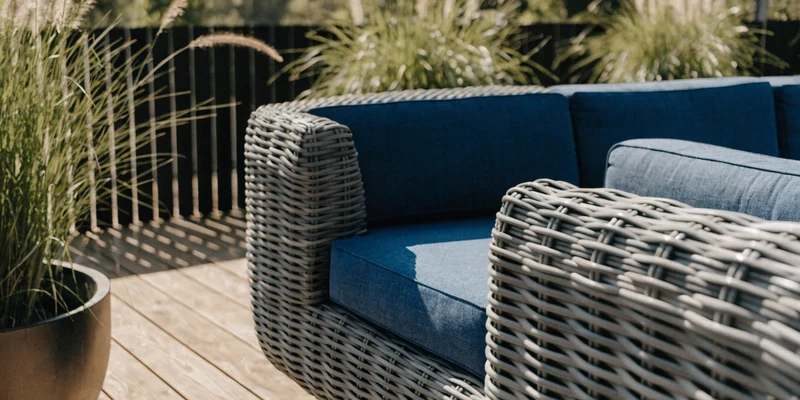
Resin wicker is a synthetic strand, most often polyethylene, pushed through a die to produce a flat, round or half-round profile that mimics natural cane, then woven in traditional patterns. The weave technique is the same one used for plant fiber; only the fiber changed. That is why the same set can be called both wicker and rattan without either word being wrong.
The detail that matters is that the same basic process yields very different grades. Two sets with an identical weave pattern can use strands that differ in thickness, resin quality and pigment method, and none of that shows in a catalog photo.
Where It Sits Against Natural Weaving
Natural rattan is warmer to look at, more pleasant to touch and genuinely repairable by a caning specialist. It is also an indoor material, because water swells the fibers and mildew settles into the joints. Our side by side comparison of resin versus natural wicker works through when each one is the right answer.
The Listing Terms That Mean the Same Thing
Sellers use at least five names for this material, and the variety is confusing rather than meaningful. Resin wicker, faux wicker, synthetic wicker, PE rattan and all-weather wicker all point to the same category: a plastic strand woven over a frame. None of them is a grade, a standard or a guarantee of anything.
What is worth reading is the specification block rather than the title. A listing that names the resin as HDPE or polyethylene, states a strand thickness, and identifies the frame metal is describing a product it is comfortable being specific about. Vague phrases like “durable resin material” fill the same space without saying anything.
| Quality signal | Better version | Weaker version |
|---|---|---|
| Strand thickness | Thicker strand, stated in the specifications | Thin strand, thickness not mentioned |
| Coloring | Pigment through the whole strand | Surface coating over a pale core |
| Weave construction | Woven over a continuous full frame | Wrapped around a partial frame with open gaps |
| Resin named | HDPE or polyethylene stated outright | Unspecified resin or plastic blend |
| Frame metal | Powder coated aluminum | Steel or metal left unnamed |
You can check most of these on the listing photos even when the text is silent. Close-ups of cut strand ends show whether the color runs through, and photos of the seat underside show whether the weave continues or stops where nobody looks.
Where the Real Quality Differences Hide
Three things separate a resin set that still looks right in year five from one that looks tired in year two, and none of them are visible in a styled product photo. Strand thickness, how the weave meets the frame, and whether the pigment is through-dyed or only on the surface do more work than any brand name.
Thicker strands resist the crushing that happens where people sit and where arms take weight. Through-dyed strand means a scratch shows the same color underneath instead of a pale streak. And a weave that runs continuously over a full frame stays taut, while one wrapped loosely around a partial frame sags into the gaps.
How to Read the Weave in Photos
Look at the seat pan and the underside of the arms. Better construction shows the weave carried right around the tube with a consistent tension and finished ends tucked in. Weaker construction shows the weave stopping at the visible faces, exposed frame underneath, and strand ends that are stapled or heat sealed in a hurry.
The Honest Drawbacks
Resin wicker has genuine downsides and the sales copy does not mention them. Cold makes the strands brittle, so a set left out through a hard freeze can crack under normal weight. Low grade strands fade unevenly and eventually split at stress points. And a broken strand is much harder to fix than a broken piece of cane.
Repair is the one that surprises people. A natural weave can be rewoven by a caning specialist with matched material. A resin strand has to be matched by profile, color and thickness, which usually means ordering from the original manufacturer or living with a visible patch. In practice, most resin sets get replaced rather than repaired.
What Makes Those Drawbacks Worse
Sun with no shade, standing water in seat wells and winter storage that never actually happens are the three accelerators. A set that is covered when wet weather sets in, rinsed after pollen season and moved out of a deep freeze avoids most of the failure modes above. Skipping all three is how a set ages five years in two.
Picks by Situation
Resin wicker covers everything from a two chair balcony arrangement to a full sectional, so the useful question is what your space needs rather than which set is best overall. Match your situation below, then check the frame material and the resin wording on the listing before ordering.
🪑 Best all round patio set
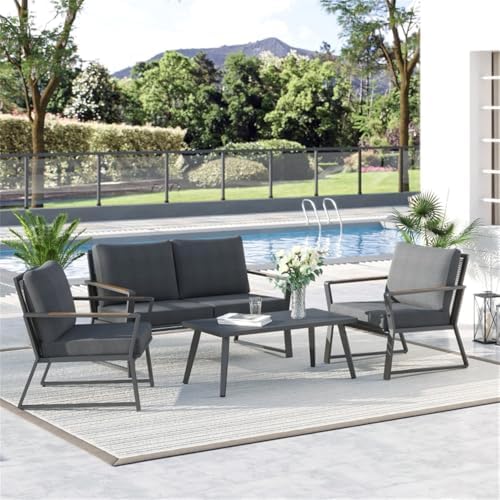
A four piece arrangement on a powder coated aluminum frame is the format that suits most patios and the one where good resin construction is easiest to find.
🛋️ Small patio or balcony
A loveseat with a small table gives you a real seating area without blocking the walkway. Slimmer arms matter more than overall width on a narrow balcony.

🎨 Light and neutral finish
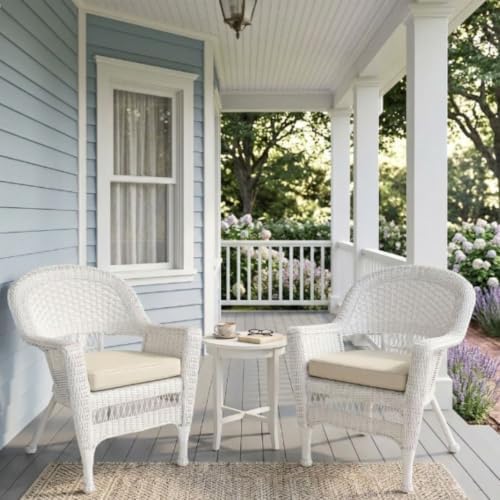
Pale weaves stay cooler in direct sun and hide fading better than deep browns, though they show yard dirt sooner. The white wicker guide covers the upkeep tradeoff.
🌿 Budget pick
At the entry level, buy a simple pair of chairs on an aluminum frame rather than a larger set on thin steel. Fewer pieces made properly beats more pieces made badly.

Common Mistakes to Avoid
- Reading the terminology as a quality tier. Resin, faux, synthetic and PE rattan describe the same category, not different grades.
- Buying on weave pattern alone. A handsome pattern on a thin strand still crushes where people sit.
- Ignoring the frame. The weave rarely fails first, so an unnamed metal frame is a real risk.
- Leaving the set out through a hard freeze. Cold resin is brittle resin, and brittle strands crack under ordinary use.
- Pressure washing it clean. High pressure lifts strand ends and forces water into the frame tubing.
- Expecting to repair a split strand. Matching profile and color after the fact is difficult, so buy the construction you want up front.
Frequently Asked Questions
What is resin wicker made of? It is a synthetic strand, most commonly polyethylene, extruded into a cane-like profile and woven over a metal frame. Higher grade sets use high density polyethylene with pigment carried through the strand rather than applied to the surface.
Is resin wicker the same as PE rattan? In practice, yes. PE rattan, synthetic wicker, faux wicker and all-weather wicker are all common names for a plastic strand woven in traditional patterns. The name tells you the category, not the quality.
How long does resin wicker patio furniture last? That depends far more on strand grade, frame metal and winter care than on brand. A UV stabilized set on powder coated aluminum that gets covered or stored lasts for years; a thin strand on bare steel can look worn after two seasons.
Does resin wicker crack in cold weather? It can. Polyethylene stiffens as temperatures fall, and in hard freezes the strands become brittle enough to crack under normal sitting weight. Storing or covering a dry set through winter avoids most of the problem.
Can resin wicker be repaired? Rarely in a satisfying way. Matching a replacement strand by profile, thickness and color usually means going back to the manufacturer, and a mismatched patch is visible. Most owners live with a small break or replace the piece.
Is resin wicker good for indoor use? It works but it looks like what it is, and natural weaving is far more pleasant indoors where weather is not a factor. Resin makes the most sense in sunrooms, screened porches and anywhere that gets genuinely wet.
The Bottom Line
Resin wicker is worth buying for an outdoor space, and the decision that matters is not which of the five names the listing uses. Look for a named resin, a stated strand thickness, color that runs through the strand, a weave that continues over a full frame, and powder coated aluminum underneath. Accept the tradeoffs honestly: it will not repair like cane, and it does not enjoy a deep freeze. Buy it for the weather resistance and store it in winter, and it earns its place.