Last updated: August 20, 2026
Spray paint for wicker furniture is chosen on two things: whether the piece is natural fiber or resin, and whether it lives indoors or out. Get those two right and almost any quality aerosol enamel will do a decent job. Get them wrong and the finish chips off a resin chair before the summer ends.
This guide explains what a woven surface actually needs from a paint, matches paint types to materials, and sets out which product type to buy for five common jobs, from refreshing a porch rocker to changing the color of a resin patio set.
This article contains affiliate links. If you buy through them, we may earn a commission at no extra cost to you. Learn more.
Quick Answer
Which spray paint should you buy for wicker?
- Natural wicker indoors: a general purpose spray enamel in satin, over a spray primer.
- Natural wicker outdoors: an exterior rated enamel, and plan to recoat every few years.
- Resin or all weather wicker: a paint specifically labeled for plastic, which carries its own bonding chemistry.
- Previously painted or stained natural pieces: a bonding primer first, then any topcoat.
- Buy more cans than the coverage figure suggests. A woven surface has far more area than its outline implies.
What a Woven Surface Needs From a Paint
Three properties matter on wicker: a film thin enough not to bridge the gaps in the weave, enough flexibility to move with the strands, and a nozzle that produces a fine even fan. Everything else is preference. Thick, heavy bodied coatings look fine on a flat panel and dry as beads on a weave.
Why Aerosols Beat Cans of Brush Paint
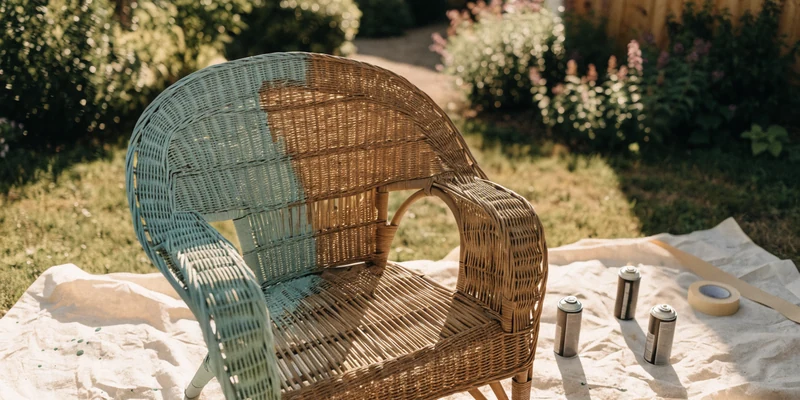
The crossings of a weave are shadow lines that a brush cannot enter without loading them with paint. An aerosol reaches them from an angle. That is also why coverage figures printed for flat surfaces do not translate: the same chair swallows far more paint than its footprint suggests.
Finish Sheen
Satin is the practical default. Flat hides imperfections but scuffs and marks where hands and cushions touch. Gloss shows every raised fiber and every uneven pass. Satin sits between the two and cleans up without looking plasticky on natural fiber.
Match the Paint to the Material
The single most common failure is using a wood suited enamel on a resin set. Polyethylene wicker is designed to shed water and dirt, which means it also sheds coatings. Paints formulated for plastic include adhesion promoters that give a fighting chance, and even those are a compromise rather than a fix.
| Material | Paint type to look for | Primer | Realistic outcome |
|---|---|---|---|
| Natural wicker, indoors | General purpose spray enamel, satin | Spray primer for wood | Years of service, easy to touch up |
| Natural wicker, outdoors | Exterior rated spray enamel | Exterior primer | Good, with periodic recoating |
| Resin or PE wicker | Spray paint labeled for plastic | Built into the product | Cosmetic improvement, chips at flex points |
| Previously painted natural | Any topcoat over a bonding primer | Bonding primer, essential | Good, provided the old finish is sound |
If you are not sure which material you have, the identification checks in our comparison of resin wicker versus natural wicker settle it in under a minute, and it is worth doing before you buy anything.
What to Buy for Five Common Jobs
Below are the product types that suit the jobs people actually take on, rather than a ranking of brands. Match the job to the description, then compare the listings on nozzle quality, exterior rating and the number of cans in the pack, which is where the real difference sits.
🪑 Refreshing a natural wicker chair indoors
A satin general purpose spray enamel is the workhorse here. Look for a wide fan nozzle and a comfort trigger, because a single chair takes far longer than you expect and a standard cap button gets painful.

☀️ A porch or patio piece in natural wicker
Choose an exterior rated enamel with UV resistance stated on the can. Outdoor natural wicker is a maintenance relationship rather than a one time job, so pick a color you can buy again in two years.

🧱 Resin or all weather wicker
Only a paint formulated for plastic gives usable adhesion on polyethylene strands. Clean thoroughly first, apply very light coats, and accept that contact surfaces will show wear before the frame does.

🎨 A piece that has been painted or stained before
A bonding primer is what lets a new color sit on an old finish without lifting it. This is also the right choice for varnished or shellacked antique pieces, where the topcoat alone will not grip.

🛡️ Sealing the finish on an outdoor piece
A clear exterior topcoat over cured color adds a sacrificial layer that takes the sun and the abrasion. It is optional indoors and genuinely useful on anything that lives on an uncovered porch.
How Much to Buy
More than the label suggests. Coverage figures on aerosol cans are calculated for flat surfaces, and a woven seat has several times the surface area of the rectangle it occupies. A single armchair with a full weave, primed and given three color coats, comfortably consumes multiple cans.
Buy the primer and the topcoat at the same time and in the same brand family where you can, since compatibility is one less variable. Buy one more can than you think you need, because running out mid coat leaves a visible line where the first pass dried before the second arrived.
Color Choices That Suit a Weave
Light colors keep the texture of the weave visible, which is the reason to own wicker in the first place. White and off white are the traditional porch choice and hide the shadow lines least. Dark colors read as a solid silhouette from a few feet away and flatten the detail almost entirely.
Mid tones are the practical compromise on outdoor pieces, since they show dust and pollen less than white and fade less visibly than black. Whatever you pick, spray a test area on the underside first; a color chip is a poor guide to how a shade reads across a textured surface.
Buying Mistakes Worth Avoiding
- Buying wood enamel for a resin set. It will look right for weeks and chip along every contact edge afterward.
- Skipping the primer to save a step. Natural fiber drinks the first coat, so you spend the saving on extra topcoat anyway.
- Choosing gloss on an old piece. Gloss magnifies every raised fiber and uneven pass.
- Ignoring the nozzle. A narrow fan makes a large weave take twice as long and produces stripes.
- Buying a discontinued color. Outdoor wicker needs recoating, and a matching can in two years saves the whole job.
Frequently Asked Questions
What kind of spray paint works on wicker furniture? For natural wicker, a general purpose or exterior spray enamel over a matching primer. For resin wicker, a spray paint specifically labeled for use on plastic, since standard enamels do not bond to polyethylene strands.
Do you need primer before spray painting wicker? On natural wicker yes, because bare fiber absorbs the first coat unevenly. On previously painted or varnished pieces a bonding primer is essential. Plastic rated paints for resin wicker usually build the bonding step into the product.
How many cans of spray paint does a wicker chair need? More than the coverage figure implies, because a weave has far greater surface area than its outline. Check the coverage stated on the can, then buy extra so you never run out partway through a coat.
What sheen is best for painted wicker? Satin. Flat scuffs where hands and cushions touch, and gloss highlights raised fibers and uneven passes. Satin cleans up reasonably and keeps the weave looking like fiber rather than plastic.
Can you spray paint outdoor wicker furniture? Yes, with an exterior rated product, and with the expectation of recoating periodically. Natural wicker outdoors needs the most attention; resin wicker takes paint poorly whatever the rating on the can says.
Should you seal wicker after painting it? Indoors it is optional. On an uncovered porch or patio a clear exterior topcoat over fully cured color gives a sacrificial layer that takes the sun and abrasion instead of the color coat.
The Bottom Line
Buy for the material first. Natural wicker takes a primer plus a satin enamel and rewards the work for years. Resin wicker needs a plastic rated product and will still chip where it flexes. Pick satin over gloss, buy a can more than the coverage figure suggests, add a clear topcoat on anything living outdoors, and choose a color you can still buy when it needs recoating.