Last updated: August 20, 2026
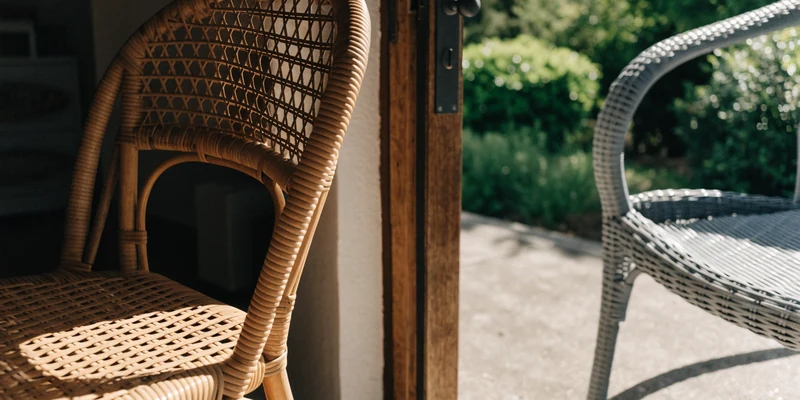
Resin wicker vs natural wicker is the one comparison in this material that has a clean answer, because the two are not really competing for the same job. Natural wicker is a plant fiber for rooms and covered porches. Resin wicker is a synthetic strand built to sit out in the weather.
This guide explains what each one is made of, where each earns its place, what separates good resin from cheap resin, and what to check on a listing before a set arrives that will not survive its first winter.
This article contains affiliate links. If you buy through them, we may earn a commission at no extra cost to you. Learn more.
Quick Answer
Should you buy resin wicker or natural wicker?
- If the furniture will sit in sun and rain, buy resin. Natural fiber absorbs water, swells and eventually splits.
- If it lives in a room, a sunroom or under a solid roof, buy natural. It is lighter, warmer to look at and ages well.
- Not all resin is equal. High density polyethylene colored through the strand is the durable version; vinyl resin gets brittle sooner.
- On a resin set the frame matters as much as the weave. Powder coated aluminum will not rust, plain steel eventually will.
- Natural wicker can be repaired strand by strand and repainted. A broken resin strand is much harder to make invisible.
One Question Settles It
Ask where the piece will spend a rainy week in November. If the answer is outdoors with nothing over it, the decision is made and it is resin. If the answer is a living room, a bedroom, a sunroom or a covered porch, natural fiber is the better buy on looks, weight and repairability.
Everything else in this comparison is secondary. People get into trouble by falling for a natural set in a showroom and then putting it somewhere it was never built to survive, not by choosing the wrong shade of gray.
What Resin Wicker Is
Resin wicker is a synthetic strand extruded to look like a woven fiber and wrapped around a metal frame. The good version is high density polyethylene, stabilized against ultraviolet light and colored right through, so a scrape shows the same shade underneath rather than a pale streak.
The Cheaper Version
Vinyl resin is the alternative you meet on inexpensive sets. It looks similar when new, but it hardens under sun and cold, and once a strand has gone stiff it snaps at a crossing rather than flexing. Cold climates punish it fastest, since brittleness and winter arrive together.
The frame is the other half of the story. Powder coated aluminum is corrosion free and light enough to move, while steel is stronger but rusts from any scratch in the coating, usually starting where a damp cushion sits against it week after week.
What Natural Wicker Is
Natural wicker is woven plant fiber, most often rattan reed over a rattan pole or hardwood frame, sometimes willow, seagrass or twisted paper rope. It is hand woven, so no two pieces are quite identical, and the strands vary slightly in tone across a single chair.
That irregularity is exactly what people are buying. A natural piece has depth that synthetic weave does not, and it takes paint well, so an old frame can be brought back to life in a new color instead of replaced. The trade is that it will not tolerate weather.
The Comparison in One Table
Six differences do the work. Read the first row first, because it eliminates one of the two options for most buyers before the others matter at all.
| Point | Resin wicker | Natural wicker |
|---|---|---|
| Weather | Built for uncovered outdoor use year round | Indoors or under a solid roof only |
| Cleaning | Rinse and wipe, no absorption | Damp cloth and quick drying, never soaked |
| Look | Even and repeating, uniform color | Varied tone, visible handwork, warmer |
| Repair | Hard to patch invisibly, strands are replaced in sections | Rewoven strand by strand with reed, then refinished |
| Refinishing | Paint adheres poorly to polyethylene | Takes spray paint and stain readily |
| What ends its life | Ultraviolet light and frame corrosion | Moisture, mildew and dry indoor heat |
The repair rows are the ones buyers overlook. A natural chair can be restored decades later, while a resin sofa with a failed weave is usually replaced.
Where Resin Wins
On a deck, a patio, a pool surround or anywhere the furniture stays put through the seasons, resin is not merely acceptable, it is the correct material. It handles rain, it does not host mildew in the weave the way plant fiber does, and it can be hosed off after a dusty summer.
Choose polyethylene over vinyl, aluminum over steel, and a weave tight enough that cushions do not sink between the strands. Our roundup of resin wicker patio furniture works through the sets and what separates the tiers.
The outdoor combination to look for
A polyethylene weave over a powder coated aluminum frame, with cushions in a solution dyed outdoor fabric, is the specification that survives seasons rather than months.

Where Natural Wins
Indoors, natural wicker is the better buy in every respect that matters. It weighs less, so chairs get moved rather than becoming permanent. It reads as furniture rather than as patio equipment. And it can be painted or restored later instead of thrown away when the color goes out of fashion.
The sunroom is the classic case for it, since a glazed room gives light without rain. Keep pieces away from a radiator and out of a window that gets hard afternoon sun all summer, because dry heat is what makes plant fiber brittle.
The indoor equivalent
A natural rattan lounge chair suits a sunroom or reading corner and can be refinished years later, which no resin piece can offer.

What to Check Before You Order
Four details separate a set that lasts from one that disappoints, and none of them appear in a photograph. Look for the strand material named as polyethylene or PE, for the phrase colored through or UV stabilized, for the frame material, and for whether cushion covers are removable and washable.
If a listing names none of those, treat the omission as information. Sellers with aluminum frames and polyethylene weave say so, because those are the features that justify the tier they are selling in.
Frequently Asked Questions
Is resin wicker as good as natural wicker? For outdoor use it is far better, since it does not absorb water or host mildew. Indoors natural wicker wins on appearance, weight and the ability to be repaired and repainted years later.
Can natural wicker be used outdoors at all? Only under a solid roof where rain cannot blow in. On an open patio it swells, splits and mildews, and the weave loosens after repeated cycles of soaking and drying.
What is the best type of resin wicker? High density polyethylene that is stabilized against ultraviolet light and colored through the strand, woven over a powder coated aluminum frame. Vinyl resin and painted steel sit a clear tier below.
Does resin wicker fade in the sun? All outdoor materials change over years of exposure, but polyethylene that is colored through fades far more evenly than a surface coated strand, which shows a pale line at the first scratch.
Can you paint resin wicker? Not reliably. Paint adheres poorly to polyethylene and tends to flake at the crossings where the weave flexes. Natural wicker is the material that takes a color change well.
Which is heavier to move around? Resin sets, because of the metal frame underneath. Natural rattan pieces are noticeably lighter, which matters if the furniture gets rearranged or carried indoors seasonally.
The Bottom Line
Let the location choose the material. Uncovered outdoors means resin, ideally polyethylene over powder coated aluminum. Indoors, a sunroom or a covered porch means natural fiber, which looks better, weighs less and can be restored. The only real mistake is buying natural because it is prettier and then leaving it in the rain.