Last updated: August 20, 2026
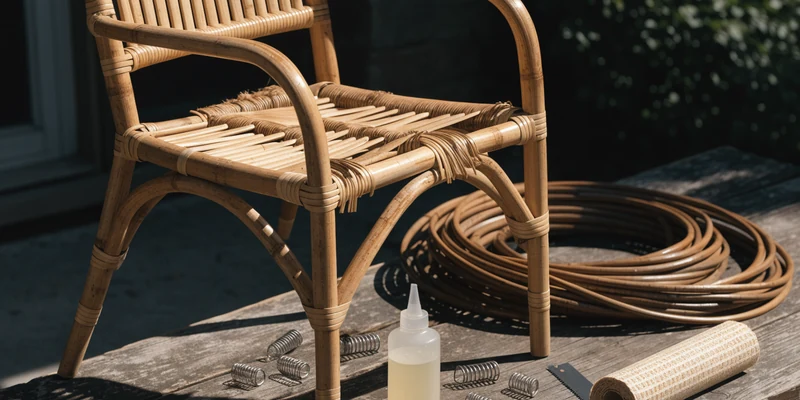
A wicker repair kit is rarely one product. What is sold under that name ranges from a coil of flat reed with a couple of tools to a full chair caning set with webbing and spline, and buying the wrong one is the usual reason a repair stalls halfway through an evening.
This guide explains what the different materials are for, which one your damage actually needs, how to size reed and cane so the repair disappears into the existing weave, and what none of the kits include but every repair requires.
This article contains affiliate links. If you buy through them, we may earn a commission at no extra cost to you. Learn more.
Quick Answer
Which wicker repair kit do you need?
- Broken strands in a woven body: flat or round reed in an assortment of widths.
- A caned chair seat with a hole in it: cane webbing plus spline, which is a different job entirely.
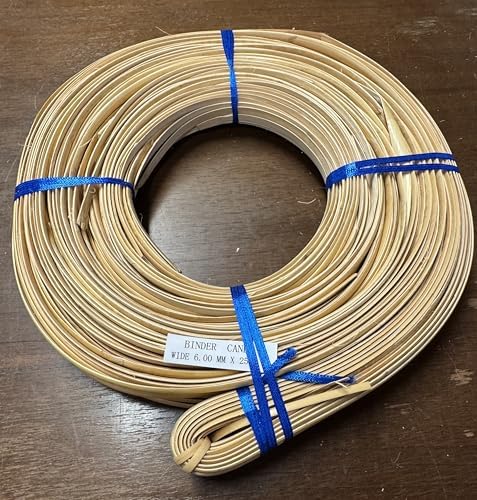
- Frayed wrapping at a joint or rim: binder cane, sold in narrow widths by the coil.
- Loose ends and open joints on any natural piece: wood glue and a set of clips or small clamps.
- Resin wicker: matching strand is rarely sold, so kits for it are essentially adhesive and patience.
What Is Actually Sold as a Repair Kit
Most listings fall into three groups. Reed assortments give you natural strand material in a few widths, sometimes with a bone folder and a trimming tool. Caning kits give you a sheet of woven cane webbing plus the spline and wedges that hold it in a groove. Everything else is glue, clips and small hand tools.
These are not interchangeable. A caning kit does nothing for a broken strand in a woven armrest, and a coil of reed does nothing for a hole in a caned dining chair seat. Identify the construction of your piece before you buy anything, because the words wicker and cane get used loosely in listings.
Reed, Cane and Binder Cane Are Not the Same
All three come from rattan, but they are different parts of the plant processed for different jobs. Reed is the inner core, cane is the outer skin, and binder cane is a wider cut of that skin used for wrapping. Matching the right one to your damage is most of the buying decision.
| Material | What it is | Used for | Sold as |
|---|---|---|---|
| Flat reed | Inner rattan core, cut flat | Body weaving, splicing broken strands | Coils by width and weight |
| Round reed | Inner core, cut round | Spokes, rims, basket style weaves | Coils by diameter |
| Chair cane | Outer rattan skin, narrow strips | Hand caning through drilled holes | Hanks, sized by width |
| Cane webbing | Pre woven sheet of chair cane | Pressed cane seats held by spline | By the foot, plus matching spline |
| Binder cane | Wider strip of outer skin | Wrapping rims, legs and joints | Coils by width |
If your chair seat has a groove running around it with a thin strip pressed into that groove, you have pressed cane and you need webbing and spline. If the seat has a ring of small drilled holes, it is hand caned. If neither, it is woven and reed is your material.
What to Buy for Five Repair Jobs
Below are the material sets that match the repairs people actually take on. Compare listings on the range of widths included, the length or weight of material, and whether the tools in the photo are genuinely useful or filler. Quantity matters more than brand on consumable material.
🧵 Broken strands in a woven chair or table
A flat reed assortment covering several widths is the flexible choice, because a single piece often uses two or three widths in different areas. Buy more length than the damage suggests; practice strands are part of the process.

🪑 A hole in a pressed cane seat
Cane webbing plus spline is a complete replacement of the seat panel rather than a patch. Measure the groove opening before ordering, since spline is sized to it and a spline that does not fit the groove makes the job impossible.

🌀 Frayed wrapping at joints and rims
Binder cane in a narrow width handles the wrapped areas where legs meet rails and where a rim is bound. This is the easiest wicker repair there is and it makes a tired piece look cared for immediately.
🔩 Holding the repair while it dries
Wood glue plus spring clamps or clips is what turns a tucked end into a permanent one. Small clamps matter more than strong ones here, since you are holding thin material against a curve rather than squeezing a joint.

🧰 Basic hand tools for weaving
A bone folder or packing tool, a sharp trimming knife and an awl cover almost every step. These turn up inside some reed kits and are sold separately elsewhere, so check the listing photo rather than the title.

Getting the Width Right
Measure an intact strand next to the damage, not one from a different part of the piece, because a single chair commonly uses different widths for the seat, the back and the trim. Reed is sold in standard widths, so the goal is the closest match rather than an exact one.
When you are between sizes, choose the narrower option. A slightly narrow strand sits below the surrounding weave and reads as shadow, which the eye ignores. A slightly wide strand stands proud, catches the light along its whole length and draws attention to exactly the spot you were trying to hide.
What Kits Do Not Include
Three things you will need and almost certainly will not receive: a container long enough to soak full lengths of reed, a way to hold the piece steady while you work on an awkward angle, and a stain or finish to blend new material into the old color once the repair has dried.
Color matching is the step most people forget to plan for. New reed is pale and will stay pale next to decades of patina. Plan on a stain, a tinted finish or a full repaint, and read our guide to painting wicker furniture before you commit to a color across a whole piece.
Buying Mistakes Worth Avoiding
- Buying a caning kit for a woven piece. Webbing and spline only work on a seat with a groove cut for them.
- Ordering one width of reed. Most pieces use several, and the wrong width shows more than the damage did.
- Buying too little material. Consumables run out mid repair and a second order rarely matches the first exactly.
- Assuming resin wicker has a kit. Matching polyethylene strand is rarely sold to consumers.
- Forgetting the finish. A perfect splice in raw reed still looks like a repair until the color is blended.
Frequently Asked Questions
What comes in a wicker repair kit? Typically a coil or assortment of reed in a few widths, sometimes with a packing tool, an awl and a trimming blade. Caning kits are different products and contain cane webbing plus spline and wedges for a pressed cane seat.
Is there a repair kit for resin wicker furniture? Not in any meaningful sense. Matching polyethylene strand is rarely sold to consumers, and any strand you find will not match the faded color of an existing set. Repairs there are limited to tucking, adhesive and frame hardware.
What is the difference between reed and cane? Reed is the inner core of the rattan stem, cut flat or round, and is used for body weaving. Cane is the hard outer skin, cut into narrow strips for hand caning or woven into sheets as cane webbing.
How much reed do I need to repair a chair? More than the visible damage suggests, because splices run well past the break and because the first attempts are practice. Buying a larger coil once is more reliable than reordering and getting a slightly different batch color.
Do you need to soak reed from a repair kit? Yes. Dry reed cracks when bent around a weave. Soak it until it flexes without splitting, work while it is pliable, and expect it to shrink slightly as it dries, which is why you do not pull it tight when wet.
Can you buy cane webbing by the foot? Yes, cane webbing is commonly sold by the running foot in standard widths, with spline sold separately by size. Measure the groove in your chair seat before ordering, since the spline must match that groove.
The Bottom Line
Identify the construction before you buy. Woven pieces need reed in an assortment of widths, pressed cane seats need webbing and matching spline, and wrapped joints need binder cane. Add glue and small clamps, buy more material than the damage suggests, choose the narrower reed when you are between sizes, and plan a stain or finish so the repair blends instead of announcing itself.
See what to buy for your repair