
Last updated: August 20, 2026
A papasan chair cushion is the part that wears out, and it is sold separately from the frame, which is good news if your bowl is still solid. It is also where most orders go wrong, because cushions are listed by diameter and frames are not all the same size, so a cushion that looks right in the photo can arrive too small to fill the bowl or too large to sit in it.
This guide covers how to measure your frame before ordering, what the size labels on listings actually refer to, the difference between fills and covers, and how to fix a cushion that has gone flat without replacing it. Every size mentioned here is something to confirm against your own chair and the specific listing.
This article contains affiliate links. If you buy through them, we may earn a commission at no extra cost to you. Learn more.
Quick Answer
How do you buy the right papasan chair cushion?
- Measure the bowl before you shop: the outside diameter across the rim, and the depth from the rim down to the lowest point.
- Cushion listings state a diameter and a thickness. Match the diameter to your rim measurement, and treat thickness as the comfort setting.
- Round single cushions are the most standardized. Oval cushions for doubles vary more, so measure both the long and the short axis.
- Fiber fill is the norm and it compresses over time. Foam or foam blends hold shape longer and feel firmer.
- If the cushion is flat but the cover is fine, adding fill or a topper is cheaper and faster than replacing it.
How to Measure Your Frame
Take two measurements with a tape and write them down before you open a single listing. First the diameter across the top of the bowl, from the outside of the rim to the outside of the rim, through the center. Second the depth, from the plane of the rim straight down to the lowest point inside the bowl.
The diameter is the number that has to match. A cushion is designed to drape over the rim rather than sit inside it, so a cushion sized to your rim measurement will look and sit correctly. A cushion much smaller than the rim leaves the frame edge exposed and slides around; one much larger bunches at the sides.
Measuring an Oval Frame
On a double or mamasan frame, take the same two measurements twice: the long axis and the short axis across the rim, plus the depth. Oval cushion listings state both dimensions, and the ratio between them differs between manufacturers, so a cushion with the right length can still be wrong across the width.
If the frame came from a retailer that no longer exists, measure rather than search. Model names from closed chains are not a reliable way to find a size, and the tape gives you an answer you can act on today.
What the Size Labels Mean
Cushion listings quote a diameter and a thickness, and sometimes a weight for the fill. The diameter is the flat, laid out measurement of the cushion, not the width once it is folded into the bowl, which is why a cushion looks oversized when it arrives and settles once it is in the frame.
Sizes cluster into a few common groups rather than being fully standardized. The table below sorts what you will typically see on listings, but the tape measure beats the label every time.
| Cushion type | Frame it fits | What to check |
|---|---|---|
| Standard round | The common single papasan bowl | Diameter against your rim measurement; the most widely stocked group |
| Oversized round | Larger single frames and some swivel bowls | Whether the listing states a larger diameter explicitly, not just extra thick |
| Oval | Double and mamasan frames | Both axes, since the ratio varies between makers |
| Outdoor | Resin wicker frames on covered porches | Fabric and fill both rated for outdoor use, not just the cover |
Thickness is a comfort choice rather than a fit issue within reason. A thicker cushion raises you higher in the bowl and feels firmer underneath; a thinner one lets you sink deeper and shows the curve of the frame more.
Fill and Cover: What Actually Matters
Fill decides how long the cushion stays comfortable and cover decides how long it looks good. Polyester fiber fill is the standard, it feels soft immediately and it compresses over months of daily use. Foam and foam blended fills cost more, feel firmer at first and hold their shape considerably longer.
Tufting is the detail worth checking. Buttons or stitched channels stop the fill migrating to the edges, which is the failure mode that leaves a cushion with a hollow middle and fat sides. An untufted cushion in a soft fill will develop that hollow faster.
Covers and Cleaning
Microsuede, corduroy, canvas and faux fur are the common cover fabrics indoors. What matters more than the fabric name is whether the cover comes off. A cushion with a full length zipper and a removable cover can be cleaned properly; a sewn shut cushion can only be spot cleaned, and that limits its life in a house with pets or children.
For outdoor use, look for a cover in a solution dyed outdoor fabric and a fill that drains or dries rather than holding water. A regular indoor cushion on a resin frame under a roof will still absorb humidity and eventually smell of it.
What to Buy
Once you have the diameter, the choice comes down to how the chair is used. Daily seating wants firmer fill and a removable cover; occasional seating can take a soft fiber cushion; a porch chair needs outdoor fabric; and a cushion that has only lost loft may need topping up rather than replacing.
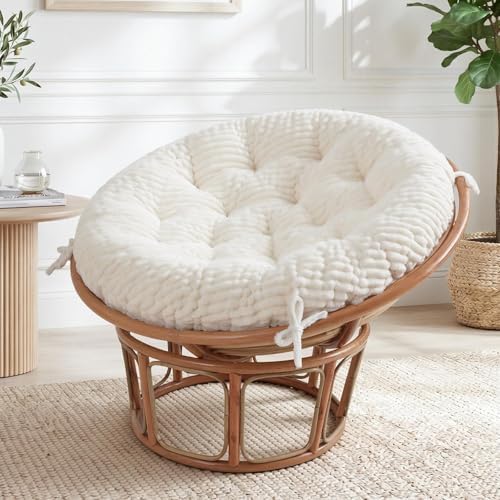
🪑 Standard round replacement
The default for a single frame. Match the stated diameter to your rim measurement and choose a tufted version if the chair gets daily use.
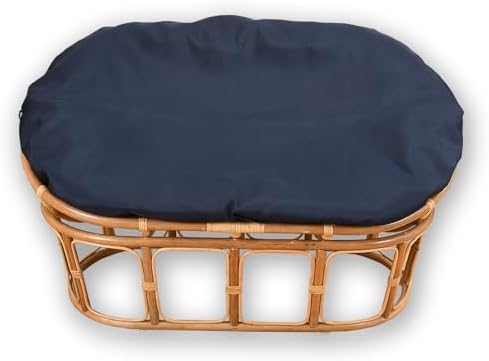
👥 Oval for a double frame
Measure both axes first. The range is narrower than for round cushions, so check availability before committing to a double frame at all.
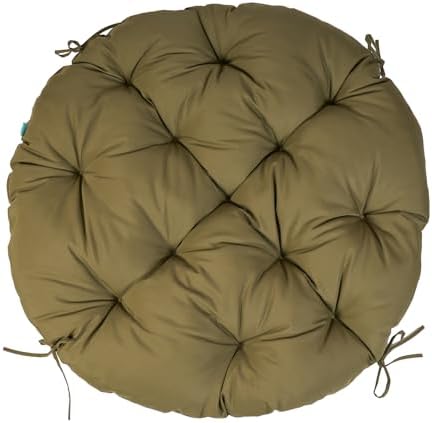
🌤️ Outdoor fabric
For a resin wicker frame on a covered porch. The cover fabric and the fill both need to be rated, not just one of them.
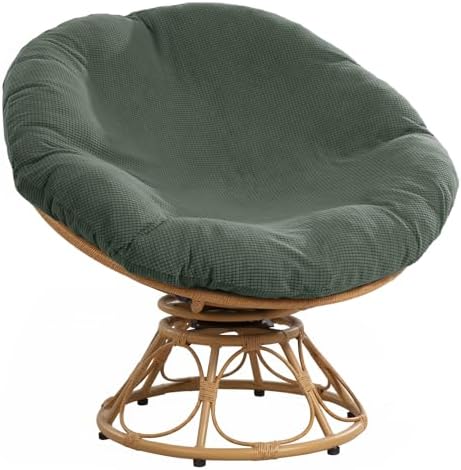
🧺 Cover only
If the fill is still supportive and the fabric is tired, a slipcover is the cheap fix and takes ten minutes.
🪶 Loose fill to top up
A flat cushion with a zipper can often be revived by adding polyester fill through the opening rather than replacing the whole thing.

Reviving a Flat Cushion
Before buying, check whether the cushion can be saved. Most flattening is fill compression rather than damage, and a cushion with a zipper can be opened, redistributed by hand and topped up with loose polyester fill for a fraction of the cost of a new one. It takes an afternoon and it works.
The two habits that extend a cushion’s life are simple: rotate it a quarter turn every few weeks so the same spot does not take every sitting, and lift and shake it to redistribute the fill instead of leaving it compressed. Neither reverses wear, but both slow it down noticeably.
Common Mistakes to Avoid
- Ordering by chair brand instead of by measurement. Frame sizes vary, including between models from the same seller.
- Measuring the inside of the bowl. The cushion drapes over the rim, so measure across the outside of the rim.
- Buying an indoor cushion for a porch frame. It will hold moisture and stay damp.
- Ignoring whether the cover comes off. A sewn shut cushion cannot be cleaned properly.
- Replacing when topping up would do. Compressed fill is not the same as a worn out cushion.
Frequently Asked Questions
How do I know what size papasan cushion I need? Measure the diameter across the top of the bowl from the outside of the rim to the outside of the rim, through the center, then match that figure to the diameter stated on the cushion listing. Also note the bowl depth, which tells you how much thickness the frame can take.
Are all papasan cushions the same size? No. They cluster into a few common groups, but frames from different makers differ, and oval cushions for double frames vary more than round ones. Always measure rather than assuming a standard.
Can you buy a papasan cushion separately from the chair? Yes, and it is the most common papasan purchase. Replacement cushions are sold on their own in round and oval sizes with a range of covers.
How do you fix a flat papasan cushion? If it has a zipper, open it, break up and redistribute the compressed fill by hand, and add loose polyester fiberfill until it regains loft. Rotating the cushion regularly afterward keeps it from flattening in the same spot.
Can you wash a papasan cushion? Only if the cover is removable, which is why the zipper matters more than the fabric name. Sewn shut cushions can be spot cleaned and aired out, nothing more.
What is the best fill for a papasan cushion? Polyester fiber fill is soft and inexpensive but compresses; foam and foam blends are firmer and hold their shape longer. Tufting matters in either case, because it stops the fill migrating to the edges.
The Bottom Line
Measure the rim diameter and the bowl depth before you look at a single listing, and match the diameter rather than trusting a brand name or a photo. Choose a tufted cushion with a removable cover for anything that gets daily use, an outdoor rated fabric and fill for a covered porch, and check whether topping up the existing fill would solve the problem before you buy a replacement at all.