Last updated: August 20, 2026
Quality wicker furniture gives itself away in places most shoppers never look: the underside of the frame, the ends of the strands, and the way a chair behaves when you lift one corner off the floor. The woven surface everyone photographs is the least reliable guide of the three.
This guide sets out what to check on a listing, what to check with the piece in front of you, and where inexpensive sets take their shortcuts, so that you can tell a well built chair from a well styled one.
This article contains affiliate links. If you buy through them, we may earn a commission at no extra cost to you. Learn more.
Quick Answer
How do you spot quality wicker furniture?
- Check the frame first. Powder coated aluminum outdoors, rattan pole or hardwood indoors, and no flex when you lift one corner.
- Look at the weave crossings. Even spacing, no gaps you can see daylight through, and no glue blobs holding strands in place.
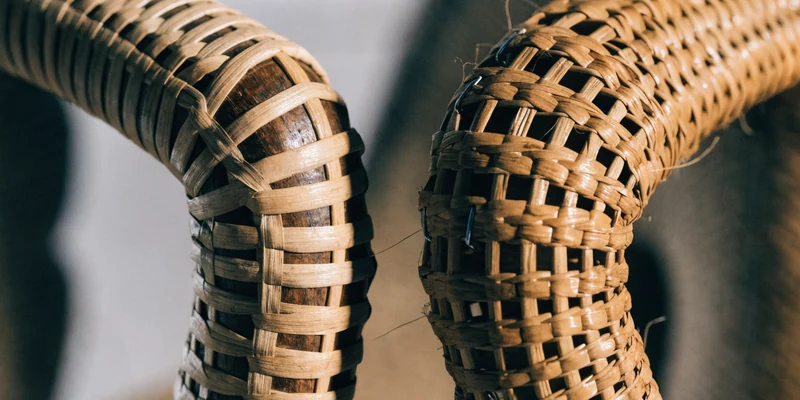
- Find the strand ends. On good work they are tucked and secured; on cheap work they are stapled or simply cut off.
- On natural pieces, the cane wrapping at the joints should be tight and continuous, since that binding is structural.
- Cushion covers should unzip and wash. Fixed covers on outdoor furniture are a design decision made to save money.
Quality Lives in Three Places
Every meaningful difference between a good piece and a poor one sits in the frame, the weave or the finish. The frame decides whether it stays rigid, the weave decides whether the surface holds up, and the finish decides how it looks after a few years. Style tells you nothing about any of them.
Work through them in that order, because a beautiful weave over a flexing frame is a short term purchase. A plain weave over a solid frame can be lived with for a very long time.
The Frame Test
Outdoors, look for powder coated aluminum. It does not rust, it is light enough to move, and manufacturers who use it always name it because it justifies their price tier. Steel is stronger but rusts from any coating scratch, and unnamed metal in a listing usually means steel.
Indoors and In Person
Indoor pieces should be framed in rattan pole or hardwood, and the joints should be wrapped in cane rather than nailed. Lift one front corner a couple of inches and watch the opposite side. A quality frame moves as one piece; a poor one racks and the weave creaks as it flexes.
Then look underneath, which is where nobody styles anything. Welds should be clean and painted over rather than bare, screws should sit flush, and the feet should have glides or caps rather than exposed cut metal that will mark a floor or hold water on a deck.
The Weave Test
Press a palm into the middle of the woven surface. It should feel firm and spring back, with the strands staying in position rather than sliding against each other. Then look at the crossings from a low angle. Consistent spacing means machine control or a skilled hand, and irregular gaps mean neither.
Strand ends are the giveaway. On good work they are woven back into the body or tucked and secured out of sight. On cheap work they are stapled to the frame or held with visible adhesive, and those are the exact points where the weave starts unraveling.
The Signals in One Table
Six checks separate the tiers, and all of them are visible without any tools. If a piece passes five of the six, the sixth is rarely worth worrying about.
| What to check | Good sign | Warning sign |
|---|---|---|
| Outdoor frame | Powder coated aluminum, named in the listing | Metal frame with no material stated |
| Indoor frame | Rattan pole or hardwood, joints wrapped in cane | Stapled joints, visible nail heads |
| Weave | Even crossings, firm and springy under a palm | Gaps, sliding strands, glue at the crossings |
| Strand ends | Tucked back into the weave or hidden | Stapled, taped or simply cut off |
| Synthetic strand | Polyethylene, colored through the strand | Surface coated strand showing pale scratches |
| Cushions | Removable zipped covers, quick drying fill | Sewn shut covers, dense foam that holds water |
The strand end row is the most reliable single indicator, because it is pure labor and it is the first thing a factory cuts when the target price drops.
Cushions Are Half the Purchase
On seating, the cushions decide comfort and they are the part that visibly ages first. Look for covers that unzip and go in a washing machine, fabric described as solution dyed for outdoor use, and a fill that lets water pass through rather than holding it in the middle of the pad.
Cushions are also replaceable, which makes them a forgiving weakness. A good frame with disappointing pads is worth buying; a poor frame with excellent pads is not. Our roundup of wicker patio chairs covers how seating types differ once you get past the weave.
What good seating looks like
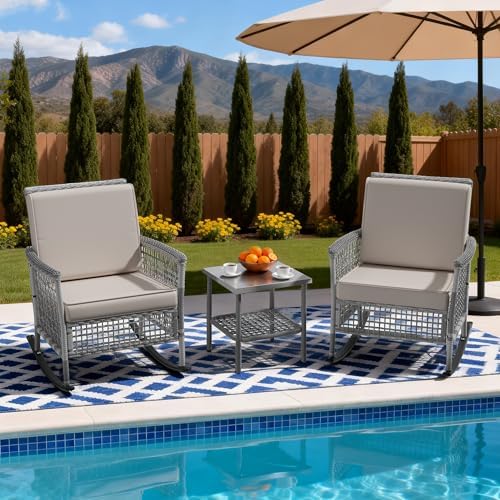
An outdoor wicker chair set with removable washable covers keeps looking presentable, because the part that gets dirty is the part you can clean properly.
Reading a Listing for Quality
Sellers name their good features and stay quiet about the rest, so absence is information. A listing that specifies polyethylene strand, a powder coated aluminum frame and a stated warranty period is describing a different product from one that only says all weather wicker in a stylish photograph.
Check the assembly note as well. Fully welded or fully assembled frames are more rigid than sets that ship flat and bolt together, and a set with many bolted connections will need those checked after its first season outdoors.
Where Cheap Sets Cut Corners
The savings come from the same five places every time: an unnamed steel frame instead of aluminum, vinyl strand instead of polyethylene, a looser weave that uses less material, strand ends stapled instead of tucked, and cushion covers sewn shut so no zipper has to be fitted.
None of these is visible in a product photo, and all of them are visible in the specification list or within a minute of the piece being in front of you. That gap between the photo and the detail is where most disappointing purchases happen.
Frequently Asked Questions
What is the best quality wicker furniture material? For outdoor use, high density polyethylene strand woven over a powder coated aluminum frame. For indoor use, hand woven rattan reed over a rattan pole or hardwood frame with cane wrapped joints.
How can I tell if wicker furniture is well made? Lift one corner and watch for racking, press the weave and feel whether it springs back, and find the strand ends to see whether they are tucked in or stapled. Those three checks sort most pieces quickly.
Is heavier wicker furniture better? Not by itself. Weight on an outdoor set usually means a steel frame rather than aluminum, which is stronger but more prone to rust. Rigidity when lifted matters far more than mass.
Does a tighter weave mean better quality? Generally yes, because a tight weave uses more material and more labor, and it stops cushions from sinking between the strands. Consistency across the whole piece matters as much as tightness.
Are glue and staples always a bad sign? Visible glue at the crossings and staples holding strand ends are shortcuts. Adhesive used discreetly at a hidden termination is normal, so judge by whether you can see it from a seated position.
What should a listing tell me before I buy? The strand material, the frame material, whether the color runs through the strand, whether cushion covers are removable, and the warranty term. A listing missing all of those is telling you something too.
The Bottom Line
Judge the frame, then the weave, then the finish, and leave the styling until last. Powder coated aluminum or a cane wrapped rattan frame, an even weave that springs back, strand ends tucked rather than stapled and cushion covers that unzip are the four signals that separate furniture from decoration.