Last updated: August 20, 2026
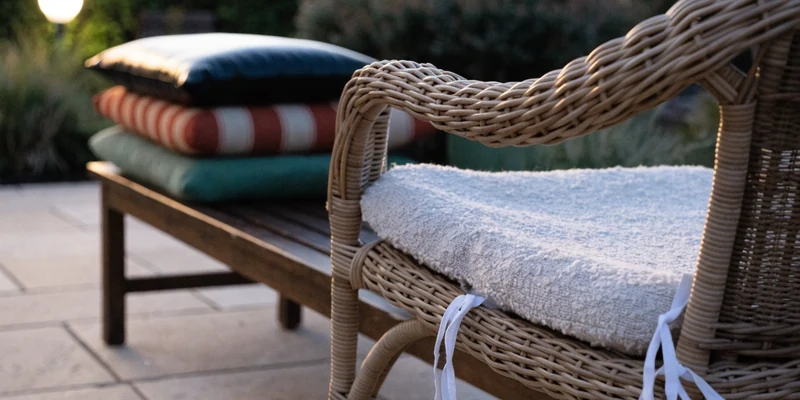
Buying cushions for wicker chairs goes wrong for one boring reason: people measure the outside of the frame instead of the seat, then order a square cushion for a seat that is not square. The pad hangs over the front edge, or leaves bare weave along the arms.
This guide covers how to measure a woven seat with a curved front, which cushion format matches which chair, and how thickness, foam and covers decide whether the pad stays comfortable. Cushion sizes vary between sellers and model years, so compare your own measurements against the dimensions in the listing before ordering.
This article contains affiliate links. If you buy through them, we may earn a commission at no extra cost to you. Learn more.
Quick Answer
How do you get wicker chair cushions to actually fit?
- Measure the flat seat area inside the arms, never the outer frame.
- Take front width, back width and depth separately; most woven seats taper.
- Match the format first: seat pad, two piece set, deep seat, bench or papasan.
- Buy ties or straps for slick resin weave, or the pad walks forward.
- Uncovered patio? Look for quick dry fill and a zippered, washable cover.
Cushion formats and what each one fits
Five formats cover almost every woven chair, and picking the right one removes most of the guesswork. A seat pad covers the sitting surface only. A two piece set adds a back. A deep seat set is thicker, for lounge frames. A bench cushion is one long piece. A papasan cushion is round.
| Cushion type | Fits | What to measure |
|---|---|---|
| Seat pad | Dining chairs, side chairs, upright porch chairs | Front width, back width, depth from back upright to front edge |
| Seat plus back set | Chairs with an open woven back you lean against | Seat as above, plus back height to the top rail and back width |
| Deep seat set | Low, wide lounge and club chairs | Seat depth and width, plus the space left between seat and top rail |
| One piece bench cushion | Loveseats, settees, sofas and swings | Full inside length between the arms, depth, allowed thickness |
| Round papasan cushion | Papasan and moon chair bowls | Bowl diameter rim to rim, plus bowl depth |
Cushion picks by situation
Three things decide the shortlist: the format your chair takes, how exposed it is to weather, and whether the weave is slippery enough to need ties. Sort those out, then check the listed cushion dimensions against your own numbers. The picks below are grouped by the situations people actually shop for.
🪑 Best for a matching pair of chairs
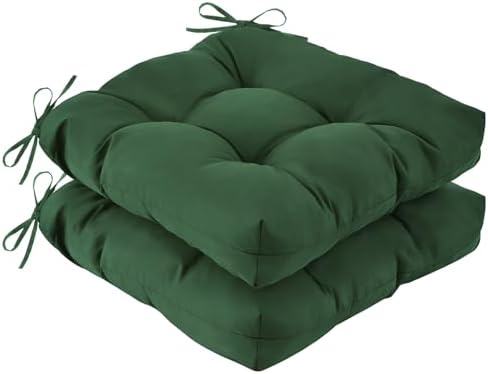
Buying two at once keeps the fabric batch and the loft identical, which shows more than you expect on a covered porch. Check whether the listed dimensions describe the cushion or the chair it was built around.
🛋️ Best for deep lounge frames
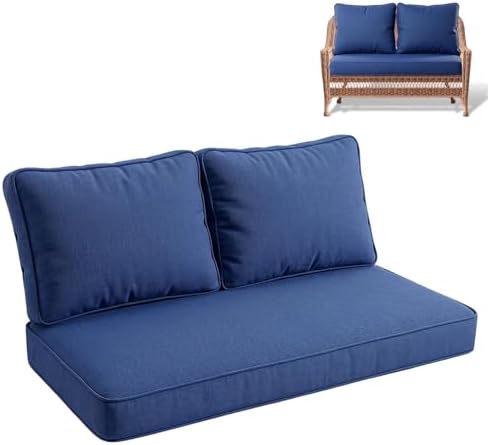
A deep seat set is the right answer for low, wide club chairs where a thin pad leaves you on the frame rail. Look for a set whose back cushion has its own ties to the top rail.

🌧️ Best for an uncovered patio
If the chair lives in the open, prioritize a cover you can unzip and wash and a fill that sheds water instead of holding it. If the listing names neither the cover fabric nor the fill, that is a signal.
🎀 Best for slick resin weave
Resin wicker is smooth, and an untied cushion slides forward every time someone stands up. Ties or hook and loop straps fix it. Confirm the tie placement matches where your frame gives you something to tie to.

🌀 Best for a papasan bowl
Papasan cushions are sold by bowl diameter and are not interchangeable with square pads. Measure across the rim in two directions, because older bowls go slightly out of round.

How to measure a seat that is not square
Measure the flat sitting surface, not the outside of the frame. Woven chairs taper, so take three numbers: width across the front of the seat, width across the back, and depth from the back upright to the front edge. Write all three down before you open a single product page.
Where the tape actually goes
Lay the tape flat on the seat, inside the arms, and stop where the surface curves up or rolls over. That roll is frame, not seating area. If the arms come down low, your usable width at the front is the gap between the arms, not the woven panel underneath them.
Curved and bowed front edges
Many wicker seats bow outward at the front. Measure to the middle of the bow and then to the corners, and use the smaller number as your working width. A cushion cut to the widest point pinches against the arms; one that overhangs the bow tips forward under your weight.
Back cushions and tapered seats
For a back cushion, measure from the seat surface to the top rail and across the back at its widest point. If your seat is clearly trapezoid, compare against listings that publish both widths. Where only one width is given, assume a rectangle and expect gaps at the back corners. The same routine works on a wicker rocking chair, with one extra check: a very tall cushion changes where your weight falls over the rockers.
Thickness, foam and covers
Thickness does two jobs. It keeps the weave pattern from pressing through into your legs, and it keeps you off the frame rails on a deep frame. A thin pad on an open weave transfers that texture straight through after a few minutes, which is the complaint behind most cushion returns. Go thicker on an open weave, thinner on a tight flat seat.
Open cell foam versus quick dry fill
Ordinary open cell foam soaks up water and holds it, which is why a cushion caught in the rain is still damp two days later and starts to smell. Reticulated or quick dry foam lets water pass straight through, and outdoor listings advertise it by name. No mention of drainage means treat it as a covered porch product.
Removable covers and fading
A full zipper decides whether you still like the cushion in year three, because you can wash out sunscreen and spills instead of scrubbing. Outdoor fabric resists fading in the fiber itself, unlike an indoor fabric with a repellent finish sprayed on. Direct sun fades everything eventually, so rotate cushions end for end.
Ties, straps and winter storage
Ties are not decoration. Resin weave is smooth, and a loose cushion migrates forward with every sit and stand until it hangs off the front edge. Look at what your chair offers to tie to: some woven backs have a solid rail at a useful height, others have nothing but weave, and those need a strap that wraps under the whole seat.
Getting them through winter
Cushions come indoors before the weather turns, and they go away dry. Store them in a breathable bag rather than sealed in plastic, where trapped moisture becomes mildew by spring. Stack them flat instead of folded, so the foam does not take a crease it never loses.
Common Mistakes to Avoid
- Measuring the frame instead of the seat. Outer dimensions include the roll of the weave, so the cushion will not drop in.
- Assuming the seat is square. One width measurement on a tapered seat leaves gaps or pinch points.
- Buying a thin pad for an open weave. The pattern presses through, and fabric quality does not fix it.
- Skipping ties on resin wicker. You will straighten the seat every time you use the chair.
- Leaving cushions out all winter. Freeze and thaw ages a cushion faster than a season of normal use.
Frequently Asked Questions
Can I use indoor cushions on an outdoor wicker chair? Only under a fully covered porch. Indoor foam and fabric hold moisture, and mildew shows up quickly once dew settles on them overnight.
My seat is wider at the front than the back. What size do I order? Order to the narrower back measurement, or find a listing that publishes both widths. A cushion cut to the front width jams against the arms.
Do I need a separate back cushion? If you sit upright and the woven back is comfortable to lean on, a seat pad alone is fine. For lounging, a two piece or deep seat set works better.
How do I stop a cushion sliding off a resin weave chair? Buy one with ties or hook and loop straps and secure it to the uprights or under the seat. Non slip shelf liner helps where there is nothing to tie to.
Are papasan cushions a standard size? No. They are sold by bowl diameter and vary between makers, so measure across the rim in two directions before ordering.
Can outdoor cushion covers go in the washing machine? Many zippered covers can, but the care label decides it. Air dry the cover rather than running it through a hot dryer cycle.
The Bottom Line
Cushion fit is a measuring problem before it is a shopping problem. Take front width, back width and depth from the flat seat area, pick the format that matches your chair, then filter on thickness, quick dry fill, a zippered cover and ties if the weave is slick. Check your numbers against the listed dimensions, and bring the cushions indoors before winter.